
Wood
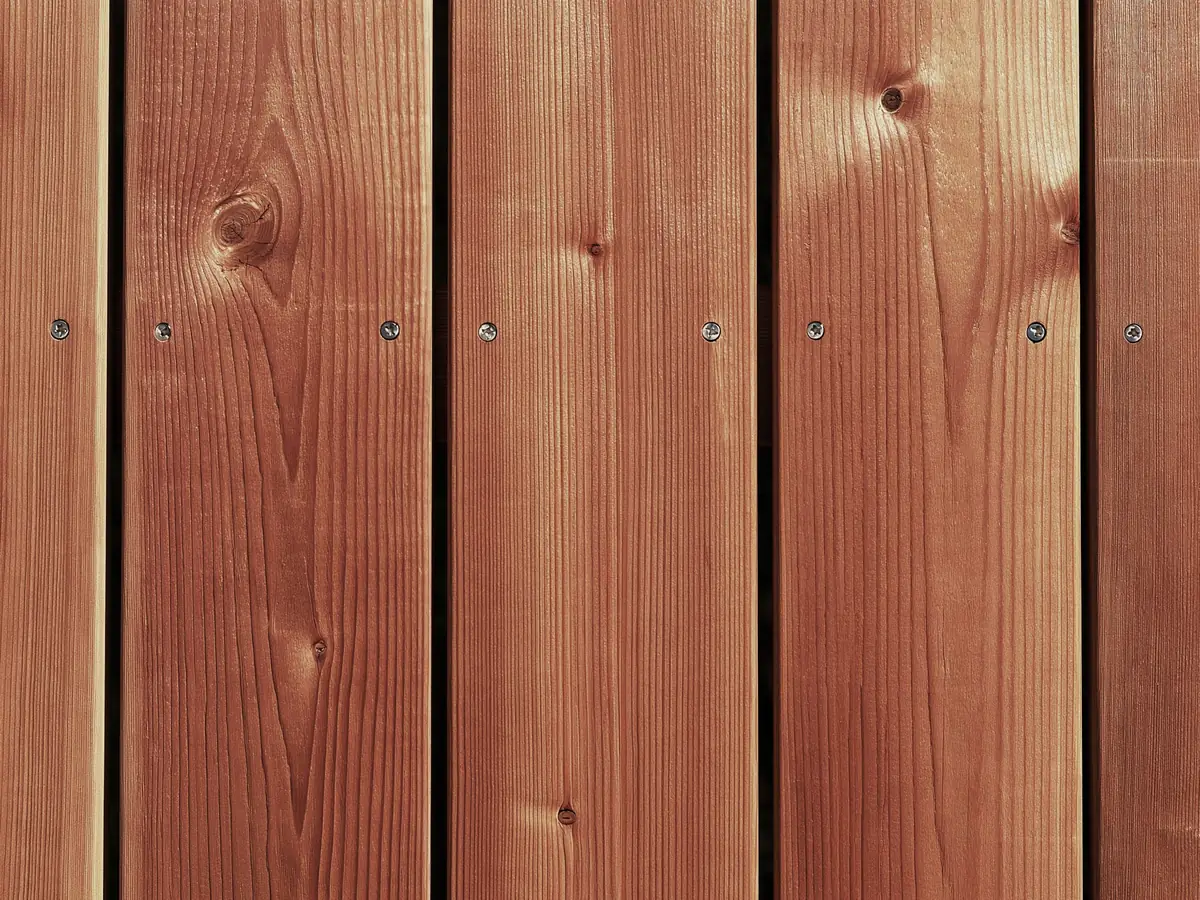
Of the three woods, pressure-treated is the least expensive. Cedar costs a little more, and redwood costs more than either. On any wood deck, plan on a fresh coat of penetrating stain every few years.
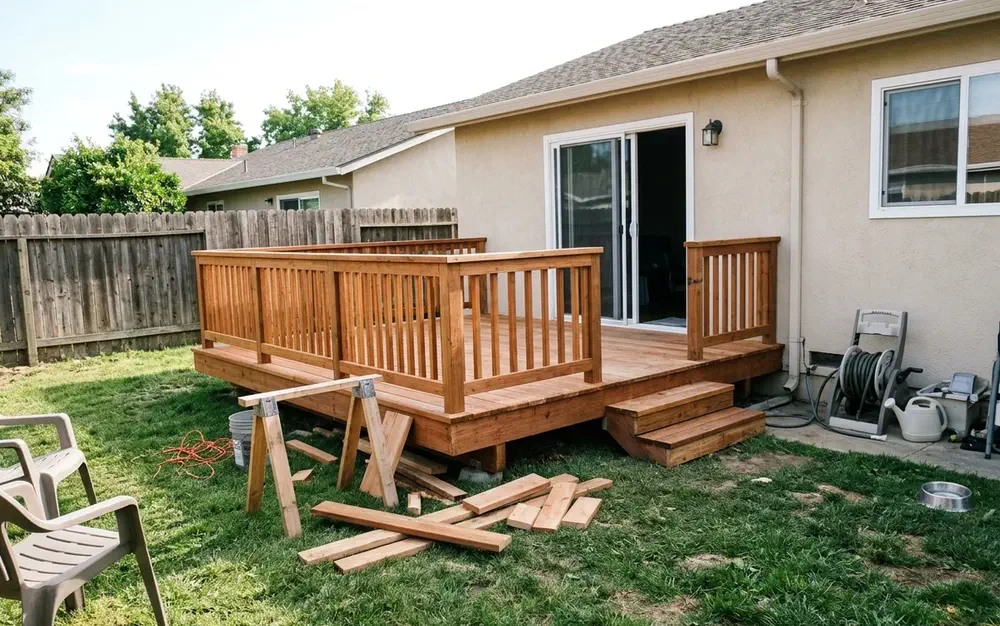
Much of a new deck is hidden once it's finished: the concrete under the posts and the frame that holds up the boards. We build all of it, out to the stairs and the railing, in wood or composite.
These are for a typical deck: roughly 16 by 20, set against the house, three steps up from the lawn. Its railing is counted in the deck prices. The railing prices are for putting about 50 feet of it on a deck you have now.
Santa Maria Deck Builders handles deck installation in Santa Maria and the towns close by: new decks built against the house or freestanding in the yard, in pressure-treated wood, cedar, redwood or composite.
If the deck you want comes off a door upstairs, or you're picturing something bigger, it will cost more than the prices above, since there's more frame under it and a longer way down to the lawn.
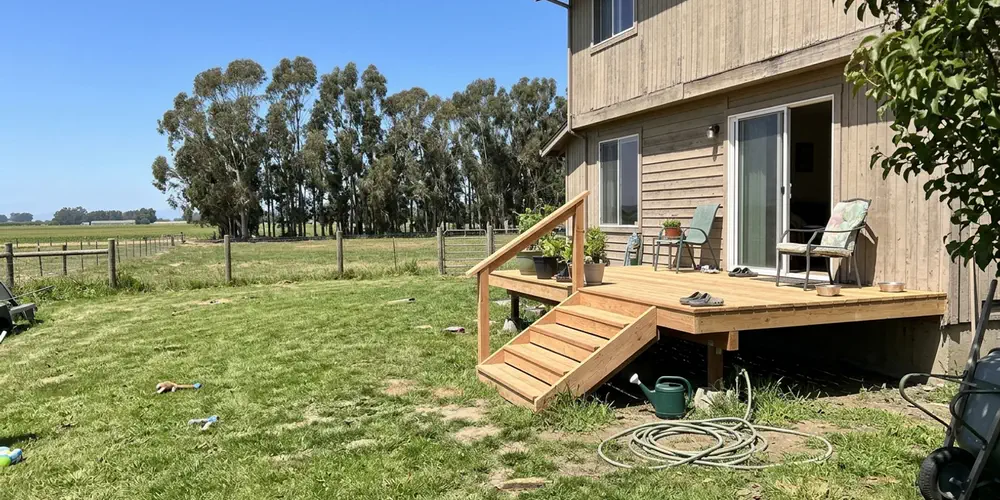
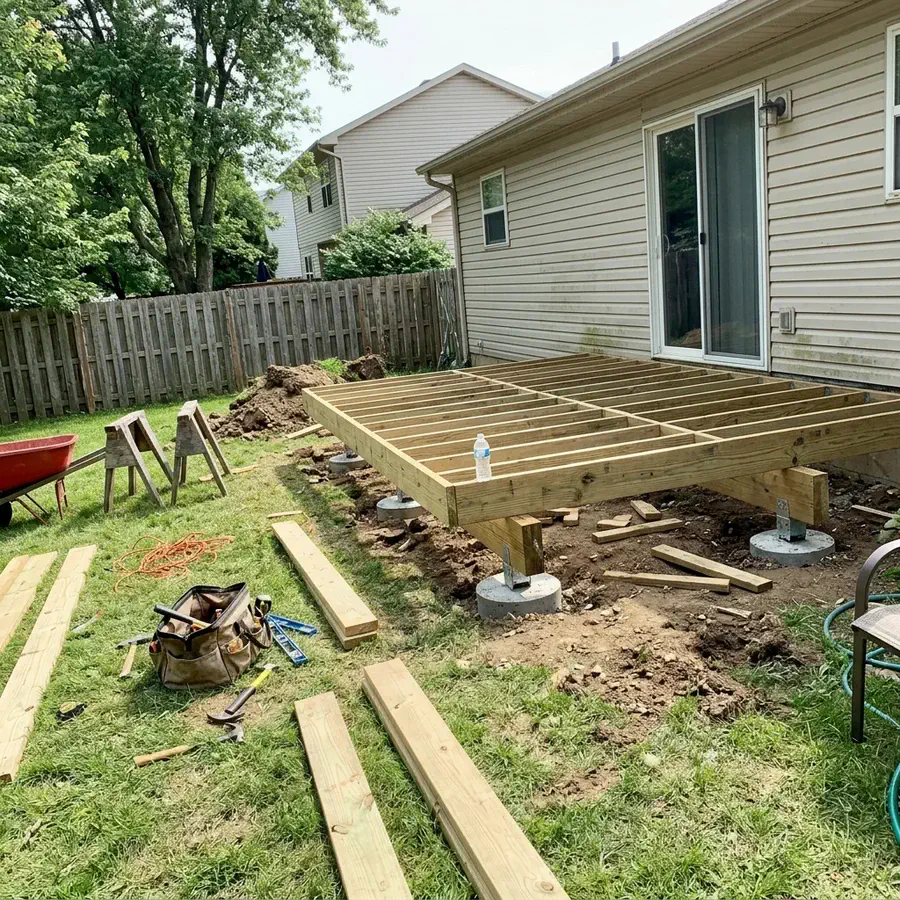
Our first look is at the house: which door the deck will step out of, and how the ground runs away from it. Once that's settled, the concrete footings go in, one under each spot where a post will stand.
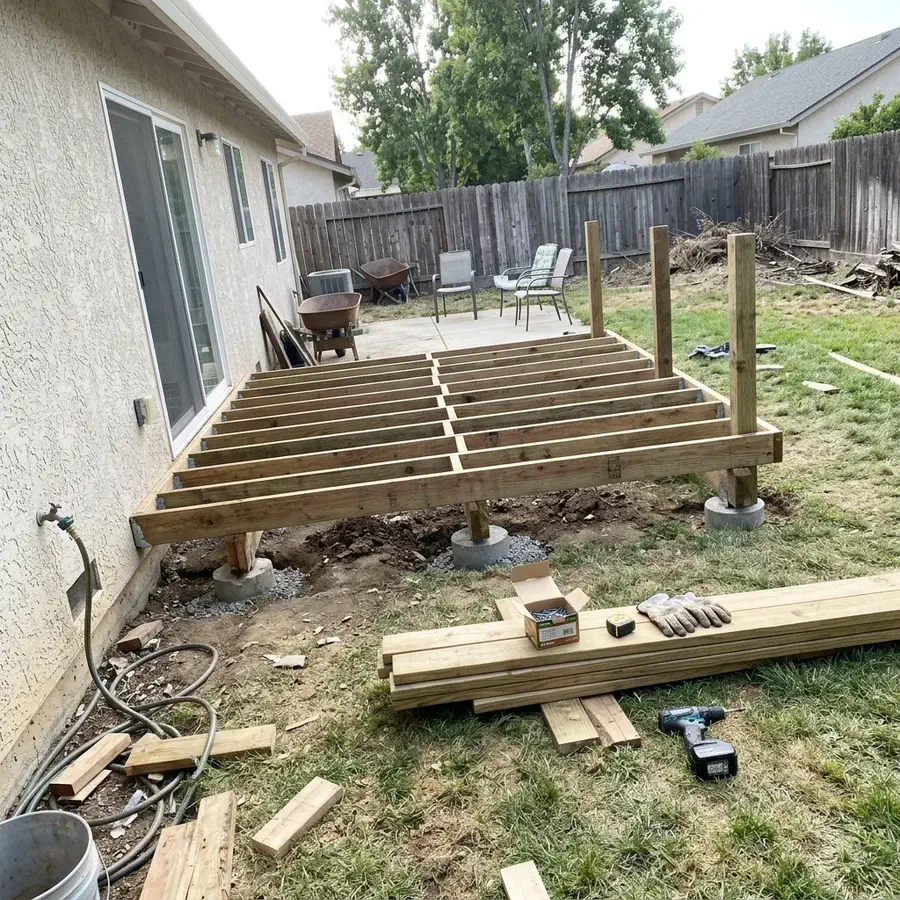
Posts rise from the footings, and the beams and joists that carry the boards are framed across them. Where the deck is built against the house, a ledger board along the wall holds up that side.
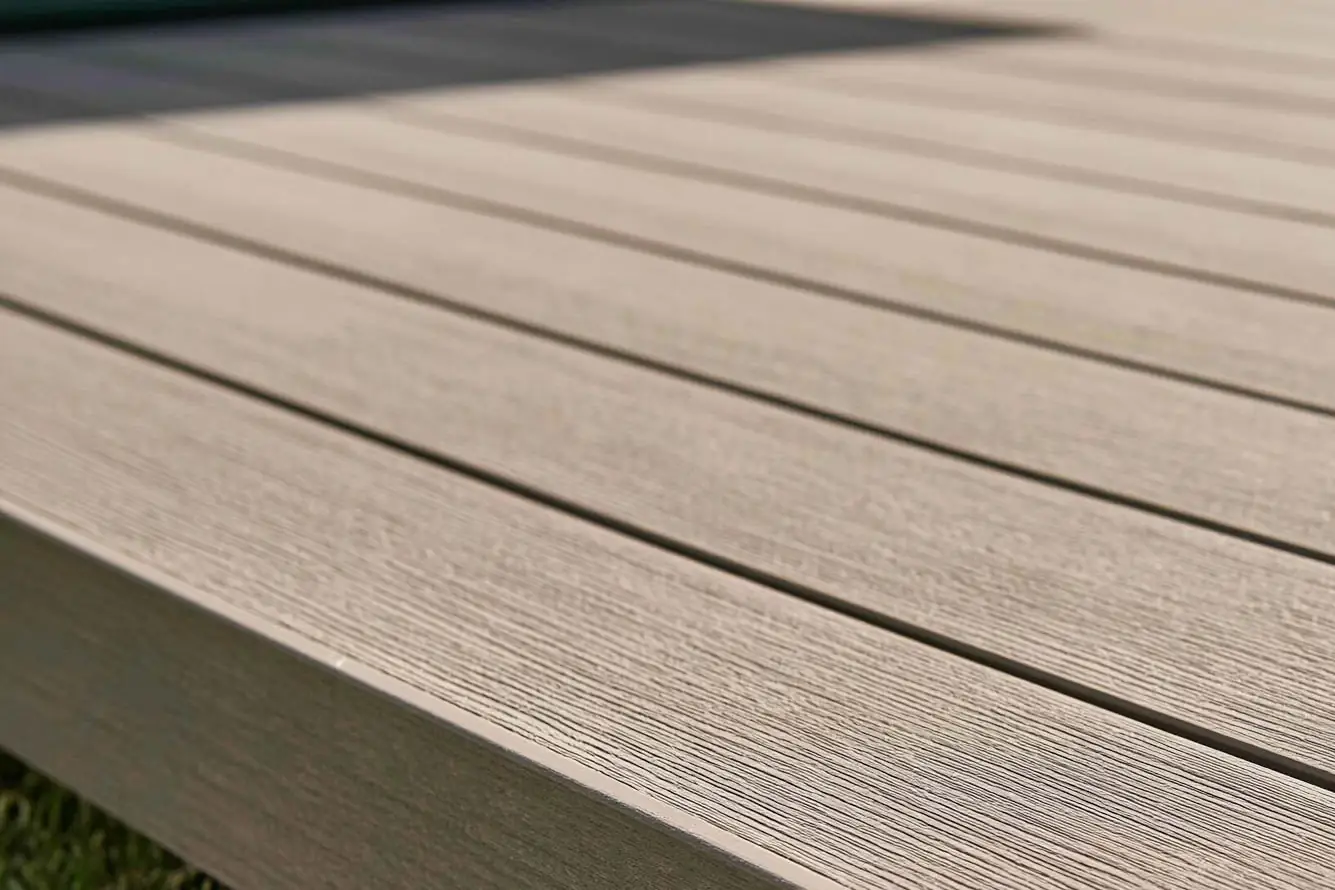
Then come the boards, laid across the joists in whichever wood or composite you chose. They're what you'll see and walk on every day, so this is where your choice shows.
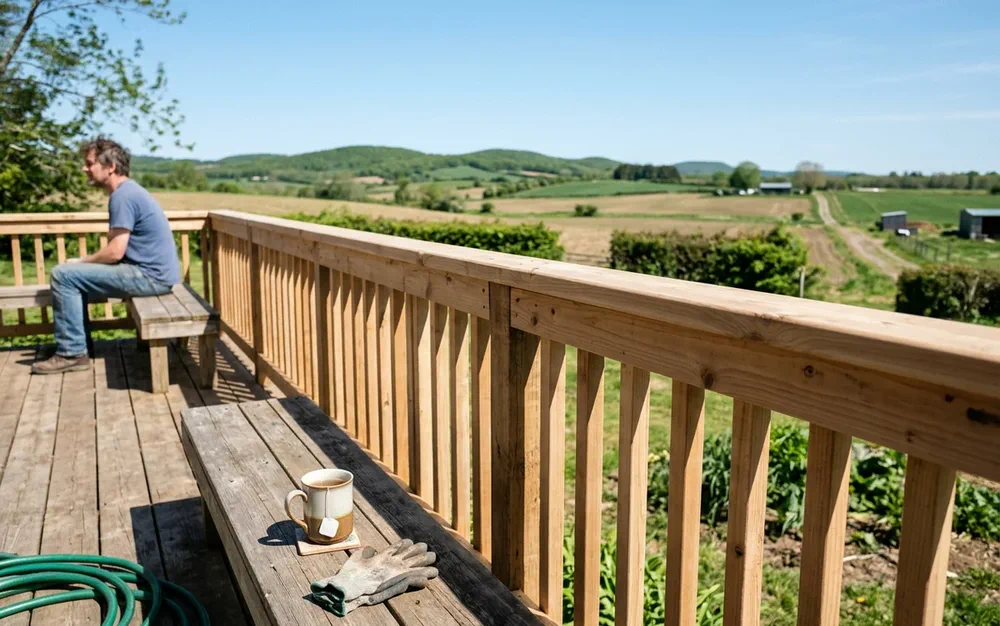
The stairs come down where they suit the way you walk out to the yard, and last of all, the railing goes on wherever the deck needs one.
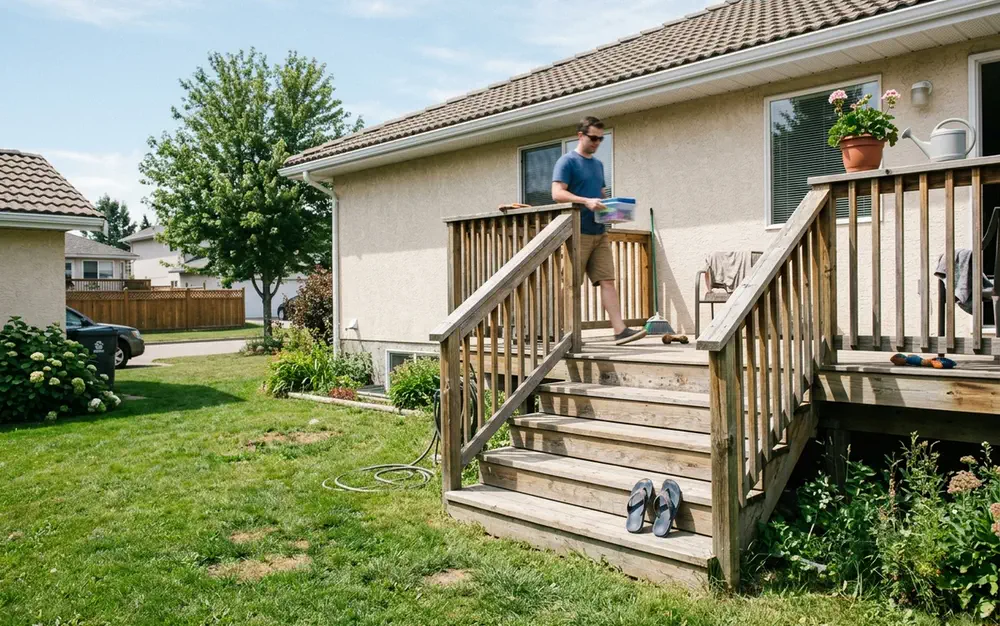
When the deck itself is still sound and you've grown tired of the railing, we can put a new deck railing on it and leave the rest alone, in wood or composite. A cable railing costs more than a wood one, as do metal and glass, and we price those once we've seen the deck.
Deck stairs can be built new too, whether the old ones are worn out or you'd like a second way down to the lawn. A wobbly railing or a creaky set of stairs can come down to a few loose pieces, though, and fixing those is a much smaller job. If a repair will do, we'll tell you.
Of the three woods, pressure-treated is the least expensive. Cedar costs a little more, and redwood costs more than either. On any wood deck, plan on a fresh coat of penetrating stain every few years.
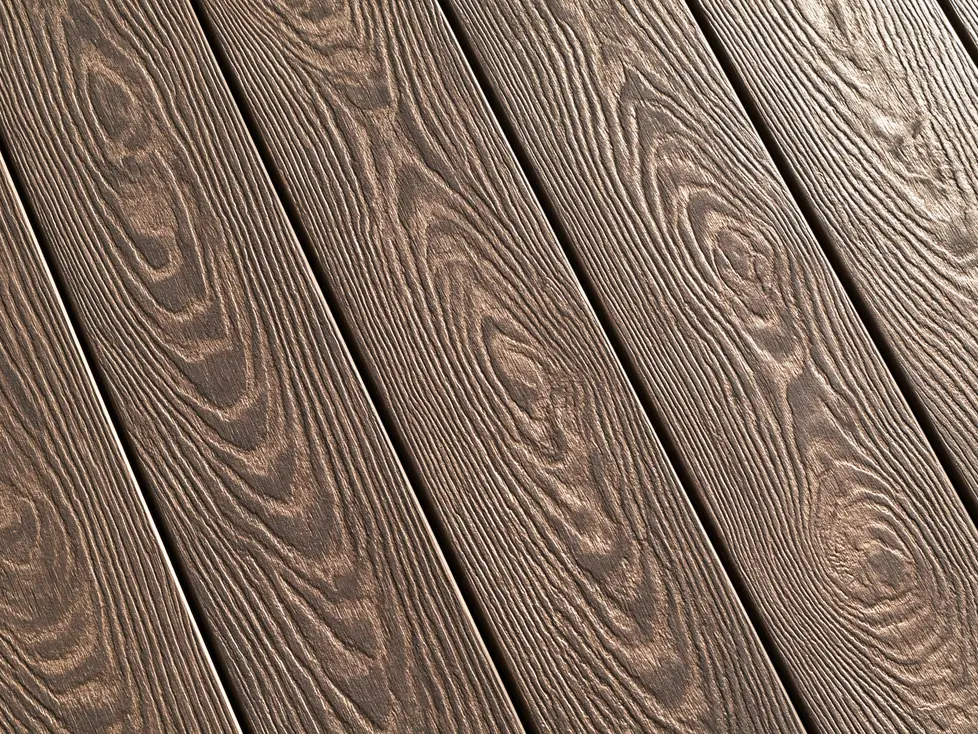
Many composite deck boards are made from wood and plastic together. Composite decking costs more than wood. If you can't decide, we're glad to price your deck in each so you can compare.
In Santa Maria, a deck needs a city building permit unless it is small, low and freestanding, and in Orcutt the county's rule applies instead.
Where California's wildfire building rules apply, which depends on the lot's fire hazard zone, a new home's deck needs fire-rated boards; we check what applies to a deck on yours.
Termites are common across most of California, and drywood termites, found along most of the coast, can get into decks. Any wood we put in contact with the soil is treated or naturally resistant.
If you might want a pergola or a patio cover over the deck someday, mention it at the start. A pergola set on a deck may need engineering or bigger footings, and that's much simpler to plan in before the deck goes in.
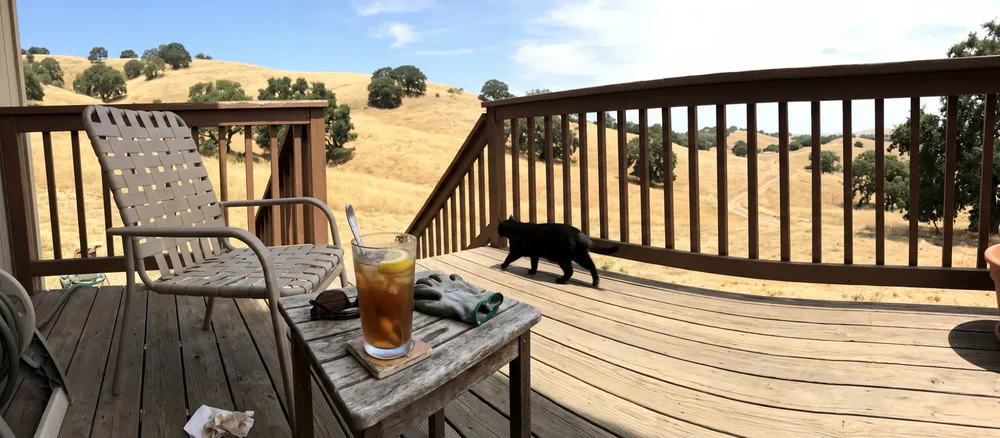
The Santa Maria Valley is shaped like a funnel opening west to the ocean, and the ocean wind and fog come straight up it. Mornings tend to be calm, and the wind picks up from the west and northwest in the afternoon. If late in the day is when you'll be out there, it's worth thinking about which side of the house the deck goes on, and whether you'd like a pergola over it.
Low cloud and fog come in at night and usually burn off by midday, and the air stays damp most of the year. Mildew grows where a deck stays damp longest: in shade, out of the wind, near plants. That's worth keeping in mind when you pick the spot.
Labor is usually the biggest part of what a new deck costs. The boards you pick matter too. Here, a typical 16 by 20 deck is $10,000 to $22,000 if it's pressure-treated wood, or $15,000 to $30,000 in composite.